Few leaders get through their careers without a restructuring, a merger, a new system or a sudden shift in the market. The plan on paper is usually sound. What goes wrong is the human side: people lose clarity, trust drops and productivity quietly falls while everyone waits to see what happens next.
That is why leading through change is a skill in its own right. It asks mid and senior managers to keep a team steady while the ground moves. This guide explains why change strains teams, the five skills change leaders need, how to decide under pressure, and what good leadership training for this stage looks like.
What Does It Mean to Lead Through Change?
Leading through change means guiding people and decisions through a transition, such as a restructuring, growth phase, new technology or leadership handover, while maintaining performance, trust and morale. It combines clear direction, honest communication and practical support for the people affected.
It differs from change management, which is the structured process of planning and tracking a change. Change leadership is the human side: how leaders behave, communicate and decide while that process unfolds.
Why Change Strains Teams
Even a well-planned change creates friction, usually for predictable reasons:
- People worry about their roles, reporting lines and job security, and that worry crowds out focus.
- Mixed messages. When leaders say different things, or say nothing, the gaps fill with rumours.
- Change fatigue. Teams that have absorbed several initiatives in a row lose energy for the next one.
- Squeezed middle managers. They must explain decisions they didn’t make and handle reactions they didn’t expect, often without enough information.
- Lost trust. If earlier changes were handled poorly, employees expect the same again.
None of these are solved by a better project plan. They are solved by better leadership.
The 5 Skills of Leaders Who Navigate Change Well
1. Providing clear direction
People can tolerate a lot of change if they understand where they are heading and why. Effective leaders explain the reason for the change, what the future looks like and what success will mean for the team. They repeat it often, because a message heard once rarely sticks. Our Mastering Vision-Driven Leadership program, led by Dr. Shams Hamid, focuses on exactly this ability to set and communicate direction.
2. Communicating openly and often
In a change, silence is read as bad news. Strong change leaders:
- Share what they know, what they don’t know and when they expect to know more
- Use several channels, such as team meetings, one-to-ones and written updates
- Listen as much as they speak, and act on what they hear
- Give middle managers the information they need before their teams ask
Communication is a skill that can be trained, and our Strategic Communication Skills program is built around it.
3. Making decisions under pressure
Change forces leaders to decide quickly with incomplete information. A simple routine helps:
- Define the decision. What exactly needs to be decided, and by when?
- Separate reversible from irreversible choices. Move fast on reversible ones, and take more care with those you can’t undo.
- Gather the minimum useful information. Waiting for perfect data usually costs more than a good-enough decision.
- Consult the right people. Include those who will carry out the decision or live with its effects.
- Decide, communicate and review. Explain the reasoning and set a date to check whether it worked.
Our Strategic Decision Making program, delivered by Zain Goplani, develops this discipline with practical frameworks.
4. Leading people through emotion
Change brings fear, frustration and sometimes grief for what is being lost. Leaders who dismiss these reactions as resistance tend to intensify them. Leaders who acknowledge them, ask questions and involve people in shaping the details build commitment. This is also where one-to-one conversations and coaching matter most.
5. Aligning structure and roles
Sometimes the real change is in how work is organized. Unclear roles, overlapping responsibilities and mismatched structures create confusion after a restructuring. Leaders need to understand how to redesign teams and workflows so that people know who decides what. Our Organizational Design & Workforce Structuring program, led by Hira Farid, covers this side of change.
Two Frameworks Worth Knowing
You don’t need to adopt a formal model, but two widely used frameworks can give your change effort a shared language:

Both are tools for thinking, not a script. Pick the one that fits the problem in front of you.
A Practical Example
The following is an illustrative scenario, not a real client case.
A mid-sized distribution company merges two regional sales teams into one. Leadership announces the decision in a single email. Within weeks, the best salespeople begin updating their CVs, and customers get conflicting answers about who their contact is. A change-capable leader would handle it differently. They would explain the reason for the merger in person, state clearly what is decided and what isn’t, brief the managers before the wider announcement, define new roles quickly and hold regular open sessions for questions. The structure of the merger might be identical. What changes is whether people feel informed and respected, and that largely decides whether they stay and perform.
What Good Leadership Training for Change Includes
Effective training for mid and senior managers goes beyond theory. Look for programs that include:
- Real scenarios drawn from your organization, not generic case studies
- Practice, such as role-plays of difficult conversations and decision simulations
- A focus on communication and decision-making, not only models
- Support for middle managers, who carry much of the load
- Follow-up, so new habits are reinforced after the workshop
Our Leading in a Changing Environment program, delivered by Shakeel Mapara, is designed around these needs, and can be adapted to your sector and situation.
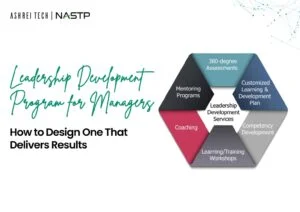
Before choosing content, it helps to understand where your leaders actually struggle. Our guide to training needs analysis shows how to find those gaps. For the broader picture of structuring a program across your management layers, read our guide to designing a leadership development program for managers.
Common Mistakes Leaders Make During Change
- Announcing and disappearing. One big announcement without follow-up leaves people guessing.
- Over-promising. Assurances that later prove false damage trust more than honest uncertainty.
- Ignoring middle managers. They are the main channel to frontline employees, so equip them first.
- Moving too fast for people. Speed matters, but people need time to adjust.
- Skipping reinforcement. Without follow-up, teams drift back to old habits.
Change Is Also About Technology
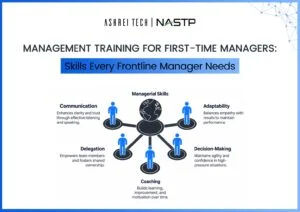
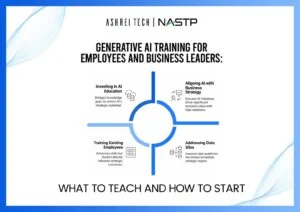
Many of today’s changes are driven by new tools, especially AI. Leaders who introduce technology without preparing their people see low adoption and anxiety about job security. If this applies to you, see our guide to generative AI training for employees and business leaders. Newly promoted managers facing their first change will also benefit from our guide to management training for first-time managers.
How AshreiTech Can Help
At AshreiTech Academy, we build leadership programs around your situation, whether you are restructuring, growing or adopting new technology. We combine relevant programs, including Leading in a Changing Environment, Strategic Decision Making, Strategic Communication Skills and Organizational Design & Workforce Structuring, then tailor the content, case studies and format to your team. Sessions can be delivered at your workplace or at our Karachi training centre.
Learn how the process works in our complete guide to customized corporate training in Karachi, or see what is currently scheduled on our corporate training calendar.
Ready to Prepare Your Leaders for Change?
Tell us about the change your organization is facing, and we will design a leadership program around it.