Most of us were never taught how to manage money. School gave us algebra, history, and chemistry, but very little about salaries, savings, debt, or the everyday trade-offs that shape our financial lives. So we learn the hard way: through a paycheck that disappears before the month ends, a savings goal that keeps getting postponed, or an unexpected expense that throws every plan off track.
If this sounds familiar, you are far from alone. And here is the part that surprises many people: earning more does not automatically solve the problem. Two people with the same income can end up in very different financial positions. The difference is rarely luck. It comes down to financial literacy, and to the small habits and decisions that repeat every single day.
In this article, we will look at what managing money really involves, why traditional approaches often fail to change behavior, and how a new kind of learning experience, The Money Game at AshreiTech Academy, helps people understand their financial reality by living through it.
What Is Financial Literacy, and Why Does It Matter?
Financial literacy is the ability to understand how money works and to use that understanding to make sound decisions. It covers earning, spending, saving, borrowing, and investing, but it is not only about numbers. It is also about behavior: how we react to pressure, temptation, social expectations, and uncertainty.When people lack financial literacy, the consequences usually show up slowly. Savings stay thin, small debts grow, and every unexpected bill feels like a crisis.
Over time, money stress can affect health, relationships, focus at work, and overall quality of life. On the other hand, people who understand their finances tend to feel more in control, make calmer decisions, and plan with confidence. Financial well-being is not about being wealthy. It is about knowing where you stand, having a plan, and being able to handle both everyday needs and surprises without constant anxiety.
How to Manage Money: The Core Principles
Whatever your income level, strong money management skills tend to rest on the same foundations.
Know Your Numbers
You cannot manage what you do not measure. Start by understanding your income, your regular expenses, your assets (what you own), and your liabilities (what you owe). Many people are surprised when they finally write everything down, because the picture is often different from what they assumed.
Spend with Intention
Large expenses like rent, school fees, or a car get plenty of attention. The quiet damage often comes from small, repeated spending: daily takeaways, impulse purchases, unused subscriptions, and convenience costs. Individually they look harmless. Together, they can quietly consume a significant part of your income. These are what we can call financial leakages.
Balance Today and Tomorrow
Every financial decision involves a tension between what you want now and what you will need later. Spending everything today leaves you exposed. Saving everything and never enjoying life is not sustainable either. Healthy money management means finding a balance that you can maintain over the long term.
Plan for the Unexpected
Medical emergencies, family obligations, repairs, and sudden job changes are part of real life. A good financial approach does not assume everything will go smoothly. It builds in room for surprises so that one bad month does not turn into a long-term setback.
Review and Adjust Regularly
Your income, responsibilities, and goals change over time, and so should your approach. Reviewing your habits regularly helps you spot problems early and keep your decisions aligned with what actually matters to you.
Why Knowing the Rules Is Not Enough
Most people already know the basics. Spend less than you earn. Save regularly. Avoid unnecessary debt. Yet knowing these rules and following them are two very different things. The reason is simple: money decisions are emotional and social, not just mathematical. A family event, peer pressure, a tempting sale, or the stress of a tough month can all push us away from the plan we made while thinking calmly. A lecture or a list of tips rarely prepares us for that moment.
People tend to change their financial behavior when they feel the consequences of a choice, not when they are simply told what to do. This is why experiential, simulation-based learning has become such a powerful approach. It gives people a safe space to make real decisions, see the results, and learn from them without risking real money.
Introducing The Money Game at AshreiTech Academy
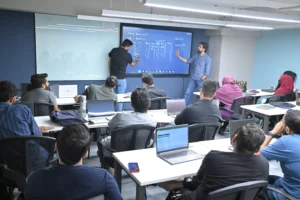
This is where The Money Game comes in. Offered by AshreiTech Academy in Karachi, The Money Game is an immersive, simulation-based experience focused on financial reality, choices, and well-being. Its tagline says it all: experience a month, make the choices, live the consequences. Instead of sitting through a traditional lecture, participants step inside a simulated financial reality. They earn, spend, save, invest, choose, and adapt, managing monthly income and commitments, making lifestyle and investment decisions, and responding to unexpected situations as the simulation unfolds.
Each decision has an impact, and participants see the consequences in real time. The program is not about getting rich overnight. It is built around one simple idea: your financial reality comes with the choices you make. There are no lectures, no magic formulas, and no guaranteed shortcuts, just an honest experience that helps you understand your own financial behavior.
The Experience: Earn, Manage, Choose, Experience, Reflect
The Money Game follows a clear flow. Participants earn an income, manage their commitments, choose how to use their resources, experience the results of those choices, and finally reflect on what happened and why. That reflection is where much of the learning takes place, because it turns a game into genuine self-awareness.
What You Will Explore: Six Learning Modules
- Understanding Your Financial Reality: Explore income, expenses, assets, liabilities, and the responsibilities that shape everyday financial decisions.
- The Power of Financial Management: Understand why increasing income is only one part of the equation, and how effective management influences financial well-being.
- Choices, Trade-offs and Consequences: Experience real-life decisions around lifestyle, family, social commitments, savings, investments, and unexpected situations, and see how each choice creates an impact.
- Short-Term vs Long-Term Thinking: Navigate the tension between immediate gratification and long-term stability while working with limited resources.
- Financial Leakages and Growth: Identify small spending patterns that create long-term pressure and discover opportunities to build healthier financial habits.
- The Reality Check: Reflect on your individual and team decisions to uncover financial behaviors, decision-making patterns, and the link between your choices and the reality you create.
Meet Your Trainer: Salman Pasta
The program is led by Salman Pasta, a passionate trainer known for his infectious energy and often described as a “Power Plant of Positive Energy.” His motto, “Be Happy, Be You,” reflects his focus on growth, resilience, and self-empowerment. His areas of expertise include building a growth mindset, emotional intelligence at work, effective communication, time management, and team collaboration, which makes him well suited to guide participants through the human side of money decisions.
Who Should Attend The Money Game?
- Working professionals who want better control over their salary, savings, and spending habits.
- Anyone who earns well but still feels stretched by the end of the month and wants to understand why.
- HR and L&D leaders looking for an engaging, practical financial well-being activity for their teams.
- Teams and colleagues who want to learn together, reflect together, and build a shared understanding of financial decision-making.
- Young professionals at the start of their careers who want to build healthy money habits early.
Why Choose AshreiTech Academy?
AshreiTech Academy is based at the NASTP Building on Main Shahrah-e-Faisal in Karachi and is known for professional training for both individuals and organizations. With thousands of certified students and a long list of corporate clients, the Academy offers a learning environment that is practical, interactive, and focused on real-world outcomes. The Money Game fits naturally into this approach, giving participants an experience they can apply the moment they walk out the door.
Program Details at a Glance
- Date: 19 November 2026
- Venue: AshreiTech Academy, NASTP Building, Main Shahrah-e-Faisal, Karachi
- Program fee: PKR 20,000 + 15% SST per participant
- Group offer: Nominate a group of 4 and get a 15% discount
- The fee includes: program manual, certificate of participation, lunch, entry pass, and networking opportunities
- Cancellation: requests are accepted up to 7 days before the program
Final Thoughts: Better Decisions, Better Financial Well-Being
Learning how to manage money is one of the most useful life skills there is, yet it is rarely taught in a way that sticks. Tips and rules are helpful, but real change comes from understanding your own choices and their consequences.
The Money Game gives you a safe, engaging way to do exactly that. You make the decisions, you see the impact, and you walk away with a clearer picture of your own financial reality and how to improve it. If you are ready to move from simply knowing about money to actually managing it better, this is a great place to start.
Reserve your seat for The Money Game – 19 November 2026
Register: https://forms.gle/GdFgxSTt8AYR8kq38
Phone: 0307-0870874
Email: msalman@ashreitech.com