Planning to study abroad, apply for an international job, or explore opportunities overseas? IELTS may be an important step towards your goal. For many students and professionals in Pakistan, achieving the required IELTS band score is a priority, but knowing how to prepare effectively can be confusing. Some candidates spend weeks watching English videos, memorising vocabulary, or solving practice tests without following a proper study plan. Others understand English reasonably well but struggle with IELTS Writing, Speaking, or time management during the exam.
The key is to prepare strategically. IELTS requires more than general English knowledge. You need to understand the test format, practise all four language skills, learn effective exam techniques, and identify the areas where you need improvement. This guide explains how to prepare for IELTS in Pakistan, the differences between IELTS test types, common preparation mistakes, and how a structured IELTS preparation course can help you work towards your target score.
What Is IELTS and Why Is It Important?
The International English Language Testing System, commonly known as IELTS, is an English proficiency test used by universities, employers, professional organisations, and immigration authorities worldwide. The test assesses four skills: Listening, Reading, Writing, and Speaking. Each section receives a band score, and your overall score is calculated from the results of all four sections. The IELTS band scale ranges from 0 to 9.
The score you need depends on your purpose. A university may require a particular overall band score and minimum scores in individual sections. Immigration authorities and professional organisations may have different requirements. Before beginning your preparation, check the English language requirements of the university, employer, or authority you are applying to. This will help you set a realistic target and choose the appropriate test.
For official information, visit the IELTS website.
IELTS Academic vs IELTS General Training: Which Test Should You Choose?
Choosing the correct IELTS test is one of the first steps in your preparation journey. IELTS Academic is commonly used for higher education applications and certain professional registration pathways. Its Reading section includes academic-style texts, while Writing Task 1 requires candidates to describe or summarise visual information, such as charts, graphs, tables, or processes.
IELTS General Training focuses more on practical English used in everyday, workplace, and social situations. Its Reading section contains different types of texts, and Writing Task 1 requires candidates to write a letter. Both tests assess Listening, Reading, Writing, and Speaking. However, the Reading and Writing content differs. Do not select a test based only on what your friends or relatives have taken. Confirm the requirements for your specific university, visa route, or professional application before booking.
Understanding the Four IELTS Sections
A strong IELTS preparation plan covers all four sections. Focusing only on your strongest skill can leave you unprepared for the areas where you need the most improvement.
IELTS Listening
The Listening section assesses your ability to understand spoken English, identify specific information, and follow conversations and discussions. You may encounter different accents, so practising with varied audio materials is helpful. Start with short recordings and practise identifying names, dates, numbers, locations, and key details. Gradually move towards full IELTS-style listening tests under timed conditions.
Pay attention to spelling and the instructions provided with each question. Even if you understand the recording, an incorrect spelling or exceeding the permitted word limit can cost you marks. Review your mistakes after each practice session. Instead of simply checking the correct answer, identify why you missed it. Was the speaker too fast? Did you misunderstand a word? Or did you lose focus while listening? A structured preparation course can help you develop these skills systematically and identify weaknesses that you may overlook during independent practice.
IELTS Reading
The Reading section tests your ability to understand written information, identify main ideas, locate details, and recognise the writer’s opinions or purpose. Many candidates struggle because they try to read every word carefully, leaving insufficient time to answer all the questions. Learning to skim for the main idea and scan for specific information can make your approach more efficient.
You should also become familiar with different question types, including matching headings, multiple-choice questions, sentence completion, and True/False/Not Given questions. For example, a statement marked “Not Given” means the passage does not provide enough information to confirm or contradict it. It does not simply mean that the statement seems unfamiliar. Regular practice is important, but understanding your mistakes is equally valuable. Reviewing your answers with guidance can help you recognise patterns and improve your reading strategy.
IELTS Writing
Writing is challenging for many candidates because it requires them to organise ideas, answer the question accurately, and use appropriate vocabulary and grammar. IELTS Academic Writing Task 1 involves describing visual information, while General Training Task 1 requires a letter. Both test types include Writing Task 2, which requires an essay. For essays, practise writing a clear introduction, developing your ideas in organised paragraphs, and supporting your arguments with relevant examples. Avoid adding unnecessary information simply to increase your word count.
For Academic Task 1, learn how to identify the main trends, comparisons, or stages in the information provided. For General Training letters, understand the purpose of the letter and use an appropriate tone. One of the biggest challenges with self-study is knowing whether your writing meets the assessment criteria. You may understand your own argument but fail to notice weaknesses in coherence, grammar, or task response. Feedback from an instructor can help you identify these problems and understand how to improve your next response. This is one of the key advantages of guided IELTS preparation
IELTS Speaking
The Speaking section assesses your ability to communicate in English through a conversation with an examiner. It includes questions about familiar topics, a longer individual response, and a discussion. Many candidates feel nervous because they rarely speak English outside a classroom or professional setting. Others hesitate because they try to construct perfect sentences before answering. The solution is consistent speaking practice. Choose familiar topics such as education, technology, your hometown, work, or hobbies. Speak aloud for 10–15 minutes and record yourself occasionally to identify long pauses, repeated words, and unclear pronunciation.
IELTS Speaking is not about imitating a particular accent. Focus on expressing ideas clearly, using appropriate vocabulary, and developing your answers naturally. Practising with an instructor or other learners can be particularly useful because it gives you opportunities to respond to questions, receive feedback, and build confidence in a more realistic speaking environment.
IELTS Myths vs Facts: What You Should Know
There are many misconceptions about IELTS preparation. Understanding the facts can help you choose a more effective approach.
Myth 1: Good English guarantees a high IELTS score.
Fact: You also need to understand the test format, timing, question types, and assessment criteria.
Myth 2: Memorising advanced vocabulary is enough.
Fact: IELTS assesses how accurately and appropriately you communicate, not simply how many difficult words you use.
Myth 3: Mock tests alone will prepare you.
Fact: Practice tests are useful, but reviewing mistakes and receiving feedback are essential for identifying weaknesses.
Myth 4: You do not need coaching if you have internet access.
Fact: Online resources help, but structured lessons and expert feedback can make preparation more focused, especially for Writing and Speaking.
Myth 5: An IELTS academy guarantees your desired band score.
Fact: No course can guarantee a particular result. Quality instruction, consistent practice, and your current English proficiency all matter.
Why IELTS Coaching Can Make a Difference
Free resources are useful for understanding IELTS and practising independently. However, access to practice questions does not automatically mean you know how to improve your performance. A structured IELTS preparation academy offers a clearer learning path. Instead of deciding what to study each day, you can follow a planned programme covering Listening, Reading, Writing, and Speaking. This helps you build skills progressively and spend more time on the areas that need attention.
One of the biggest benefits is personalised feedback. Writing and Speaking involve several assessment criteria, and it can be difficult to evaluate your own performance objectively. An instructor can help you identify weaknesses in grammar, vocabulary, organisation, fluency, and task response. Coaching also encourages accountability. When preparing independently, it is easy to postpone practice or avoid difficult sections. Scheduled classes, assignments, and regular assessments help you maintain a routine and measure your progress.
Mock tests become more valuable when you understand what your results mean. Rather than simply looking at a score, guided preparation can help you identify why you lost marks and what to work on next. This does not mean you should stop practising at home. Independent practice is important, but it works best when supported by a clear strategy and feedback. Combining classroom or online instruction with regular practice can help you make better use of your preparation time. When selecting an IELTS academy in Pakistan, look for a programme that covers all four skills, includes meaningful practice, provides feedback, and helps you monitor your progress. Avoid choosing a course based only on promises of a high band score.
How to Prepare for IELTS at Home Between Classes
Home practice can reinforce what you learn in a course, helping you build consistency between lessons. However, without a clear plan, independent preparation can become repetitive and difficult to evaluate. Start by completing sample questions from all four sections to understand your current level. Use the results to identify your weaker areas and discuss them with your instructor if you are enrolled in a preparation course.
Create a weekly schedule that includes Listening, Reading, Writing, and Speaking. For example, you could practise Listening and Reading on selected days, complete writing tasks twice a week, and speak English aloud for 10–15 minutes daily. Keep a record of your recurring mistakes. If you repeatedly struggle with essay structure, focus on organising paragraphs before learning more advanced vocabulary. If you cannot finish Reading on time, practise skimming and scanning.
A Practical Four-Week IELTS Study Plan
A four-week study plan can help organise your preparation, particularly if you already have a reasonable foundation in English. However, the time required varies depending on your current level and target band score. Some learners may need several months.
Week 1: Understand the Test
Learn the format of your chosen IELTS test, understand the question types, and complete sample exercises. Identify your strengths and weaknesses so you can focus your preparation.
Week 2: Improve Your Weak Areas
Practise the sections where you need the most improvement. Work on writing structure, reading techniques, listening accuracy, and speaking fluency. If you are attending an academy, use instructor feedback to guide your practice.
Week 3: Practise Under Time Limits
Complete timed sections and review your performance. Identify whether your mistakes come from poor time management, misunderstanding questions, or language difficulties.
Week 4: Review and Prepare for Test Day
Complete a full practice test under realistic conditions. Review recurring mistakes, revise key techniques, and confirm your test booking details and identification requirements.
Remember that this is a sample plan, not a guarantee of readiness in four weeks. Take enough time to build the skills required for your target score.
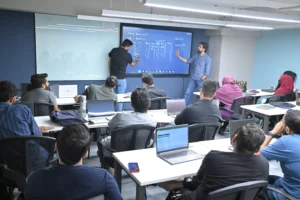
IELTS Preparation at AshreiTech Academy
Preparing for IELTS is an important step towards your academic and professional goals. Having a clear plan, regular practice, and the right guidance can make the process more manageable. At AshreiTech Academy, you can enquire about the IELTS Preparation Course to learn how structured preparation can support your English language development and test readiness.
Whether you are preparing for higher education, exploring international opportunities, or working towards a required IELTS band score, it is important to understand your current level and identify the skills you need to improve. A guided learning environment can help you approach the four sections systematically, practise relevant question types, and develop a more organised study routine. Combined with consistent practice outside class, this can help you prepare with greater confidence.
Final Thoughts
Preparing for IELTS is not just about learning English or completing practice tests. It requires a clear understanding of the exam, consistent effort, and the ability to identify and correct your weaknesses. Official resources can help you get started, while structured coaching can provide guidance, feedback, and accountability when you need additional support. Combining the two gives you a more organised way to prepare.
If you are planning to take IELTS, start early, understand your target score, and choose a preparation approach that fits your needs.
Take the next step towards your goals with AshreiTech Academy. Visit https://www.ashreitech.edu.pk/ to enquire about the IELTS Preparation Course and find out how to get started.