Not long ago, a strong CV meant a recognized degree, a few years of relevant experience, and a list of software you could navigate without a tutorial. That formula worked for decades. It no longer works. The skills employers valued in 2020 are not the skills they’re hiring for in 2026. The gap between what education systems produce and what workplaces actually need has never been wider and the professionals and teams caught on the wrong side of that gap are feeling it in hiring decisions, promotion pipelines, and performance reviews.
LinkedIn’s 2025 Future of Work Report found that the skills required for most jobs have changed by approximately 68% since 2015 and that pace is accelerating. The World Economic Forum projects that 39% of existing skill sets will be disrupted or made redundant within the next three years. The question every professional and every organization must now answer is simple: are you building the skills the future is hiring for, or are you perfecting skills the market is quietly moving past?
This article breaks down the skills that employers across industries are actively seeking in 2026 and where corporate training programs in Karachi through AshreiTech Academy can help your team get there.
Leadership and Strategic Thinking
Leadership has never been more in demand and never more misunderstood. In 2026, employers are not simply looking for people who can manage. They are looking for professionals who can navigate ambiguity, make decisions under pressure, inspire performance across generations, and carry a team through change without losing direction.
The bar has risen significantly. Front-line managers are now expected to operate with the strategic awareness once reserved for senior executives. Mid-level leaders are expected to build culture, not just maintain it. Senior leaders must balance long-term vision with short-term agility in environments that rarely offer the luxury of certainty.
Corporate leadership development is no longer a perk reserved for the C-suite. It is a systemic investment that high-performing organizations build into every layer of the business, because the organizations that will lead their industries in the next five years are those building leaders at every level right now.
AshreiTech Academy Corporate Training Programs for this skill:
- Building High-Performance Teams: A Strategic Leadership Workshop — Syed Faizan Ahmed (Upcoming)
- Modern-Day Managerial Skills — Zain Goplani (Upcoming)
- Leading in a Changing Environment: Mid to Sr. Leadership — Shakeel Mapara (Upcoming)
- Leadership & Influence Through Neuromarketing — Maliha Farooq (Upcoming)
- The Leadership Shift: Mastering the Mindset, Skills, and Resilience to Lead with Impact — Syed Faizan Ahmed (Upcoming)
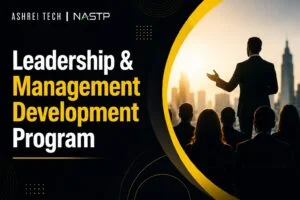
- Leadership & Management Development Program — Hira Farid (Upcoming)
AI Literacy and Human-AI Collaboration
This is the defining skill divide of 2026.
Artificial intelligence is no longer a niche technical domain. It is a workplace reality embedded in marketing, finance, operations, customer service, legal, and virtually every other function. The professionals who understand how to work alongside AI, how to prompt it effectively, interpret its outputs critically, and know its limits are categorically more valuable than those who don’t.
But AI literacy is not about becoming a data scientist. It is about understanding AI well enough to make better decisions with it. It means knowing how to use generative tools to accelerate your work without surrendering your judgment to them. It means understanding where automation adds value and where human nuance is irreplaceable.
For HR professionals specifically, AI is reshaping how talent is acquired, managed, and developed. Understanding how to integrate AI into people strategies while keeping the human element central has become one of the most urgently needed capabilities in business and management training today.
Our AI Literacy Programs:
- The Intelligent Leader: Generative AI for Business Masterclass — Muhammad Shahzar (Completed)
- Impactful HR Business Partnering in the Age of AI — Ahmed Ali Zia (Completed)
Critical Thinking and Complex Problem-Solving
Here is the paradox of the AI era: as machines get better at processing information, the ability to think critically about that information becomes more valuable, not less. AI can generate answers faster than any human. What it cannot do is question whether the answer is the right one, weigh ethical trade-offs, account for organizational dynamics, or recognize when a problem has been incorrectly framed from the start. That is the domain of human critical thinking and employers know it.
The World Economic Forum has ranked complex problem-solving among the top three most in-demand skills globally for three consecutive years. In 2026, the professionals who can interrogate, challenge, and contextualize information, rather than simply receive it are the ones driving real value.
This skill is not innate. It is developed through structured learning frameworks that train the mind to separate assumption from evidence. It is one of the most consistently featured themes across corporate training programs in Karachi precisely because the demand for it spans every industry and every level.
Our Problem-Solving Training Programs:
- Solve Smart: Turning Challenges into Solutions — Syed Faizan Ahmed (Completed)
- Strategic Decision-Making Using Management Accounting Concepts — Abdul Rahim Suriya (Upcoming)
- Think Smart – The Power of Analytical & Strategic Thinking — Muhammad Adnan Salat (Upcoming)
- Mind Mapping for Smarter Thinking & Higher Productivity — Sania Alam (Upcoming)
- Developing Thinking Skills for Better Problem-Solving & Decision-Making — Zain Goplani (Upcoming)
Emotional Intelligence and Interpersonal Effectiveness
Every major survey of senior leaders in 2025 and 2026 tells the same story: technical skills get people hired; emotional intelligence determines how far they go. Emotional intelligence, the ability to understand your own emotional responses, read others accurately, navigate conflict constructively, and build genuine trust has become a premium capability in every sector. Remote and hybrid work has made it harder to build relationships organically. Rapid change has made psychological safety a competitive advantage.
Diverse, multigenerational teams have made the ability to communicate across difference non-negotiable. Employers are actively looking for candidates and team members who can manage difficult conversations without escalating them, give and receive feedback without defensiveness, and build the kind of interpersonal trust that holds teams together under pressure. These capabilities sit at the very heart of effective corporate leadership development and yet they are among the most consistently underdeveloped skills in most organisations.
Our Corporate Training Programs for this skill:
- Wellness at Workplace — Usman Yousuf Butt (Completed)
- Enhancing Emotional Intelligence through Myers-Briggs® Type — Dr. Muhammad Qamar-ul-Hassan (Upcoming)
- The Art of Receiving & Giving Feedback — Shakeel Mapara (Upcoming)
Communication, Personal Branding and Influence
Communication has always been important. In 2026, the standard has moved considerably higher. Professionals are now expected to communicate effectively across more formats, more audiences, and more contexts than any previous generation. Written communication must be crisp and purposeful. Verbal communication must be confident and structured. And beyond the basics, employers are paying close attention to two specific dimensions of communication in 2026.
The first is persuasive influence the ability to take complex information and translate it into a narrative that moves people to action. The second is personal brand, the ability to position yourself as a credible, valued professional in a world where visibility and reputation increasingly precede the conversation.
In Karachi’s competitive corporate landscape, communication and influence have become decisive differentiators. The corporate training programs in Karachi that consistently fill fastest are precisely those that develop these capabilities because every professional, at every level, feels the gap.
Our Communication and Personal Branding Programs:
- Strategic Communication Skills — Dr. Shams Hamid (Completed)
- Personal Branding for Career Advancement — Baseer Sami (Upcoming)
Sales, Business Development and Customer Excellence
The ability to generate revenue, build client relationships, and deliver exceptional customer experiences has always been commercially critical. In 2026, it has become a skill set that organizations must systematically develop not leave to personality or instinct. Modern sales professionals are expected to understand buyer psychology, adapt their approach to different decision-makers, and deliver value consultatively rather than transactionally.
Business development in cross-border markets, particularly GCC and regional expansion requires an entirely different skill set from domestic selling. And customer service, once treated as a support function, is now recognized as one of the most powerful drivers of loyalty, differentiation, and growth. This category sits squarely at the intersection of business and management training because building a revenue-generating team is as much a management challenge as it is a skills challenge.
Our Sales Mastery Trainings:
- The Art of Business Development in GCC — Atif Iqbal (Completed)
- Creative Retail Selling Skills — Nadym Chandna (Completed)
- Sales Mastery: Building the Mindset, Skills & Strategies for Effective Selling — Zain Goplani (Upcoming)
- Customer Service Excellence — Syed Faizan Ahmed (Upcoming)
Human Resources, Organizational Design and Inclusive Workplaces
The HR function has undergone a structural transformation. The HR business partner of 2026 is not an administrative coordinator they are a strategic advisor to the business, a culture architect, and increasingly a technology integrator. Beyond the HR function itself, organizational design the ability to structure teams, roles, and workflows in ways that enable rather than obstruct performance, has emerged as a critical skill for operations leaders, business unit heads, and founders.
And diversity, equity, and inclusion are no longer optional commitments. They are operational capabilities that directly affect how well teams think, collaborate, and perform. The depth and breadth of HR and OD programming in AshreiTech Academy’s business and management training calendar reflects how seriously the Pakistani corporate sector is beginning to take people strategy as a competitive capability.
Our HR and Workforce Structuring Trainings:
- Impactful HR Business Partnering in the Age of AI — Ahmed Ali Zia (Completed)
- Integrating GEN-Z into Today’s Workplace — Syed Faizan Ahmed (Completed)
- Managing Unconscious Bias at Workplace — Mohsin Ahmed (Completed)
- The Power of Workplace Rituals: Build Culture Through Intentional Experiences — Nooruddin Merchant (Upcoming)
- Organizational Design & Workforce Structuring — Hira Farid (Upcoming)
- The Divine Blueprint: Integrating DEI & Professional Excellence Through Islamic Teachings — Nadym Chandna (Upcoming)
- Managing Unconscious Bias at Workplace — Mohsin Bhatti (Upcoming)
Adaptability, Learning Agility and Professional Growth
The shelf life of specific knowledge is shrinking. The career skill that never expires is the ability to acquire new skills quickly, apply them under pressure, and update your approach when the context changes. Employers in 2026 are not just evaluating what candidates know. They are evaluating how quickly candidates learn what they don’t yet know. Interview processes increasingly include scenarios designed to assess how people approach unfamiliar problems not whether they have the answer, but whether they have the intellectual agility to find it.
For young professionals in particular, this is the meta-skill that unlocks every other skill on this list. And for organizations designing corporate leadership development pipelines, building learning agility into the culture not just the curriculum is what separates organizations that adapt from those that lag.
Our Self Potential Training Programs:
- Mind Matters: Train the Trainer Program — Usman Butt (Completed)
- Unleashing Self Potential for Young Professionals — Shakeel Mapara (Upcoming)
Neuromarketing and Consumer Psychology
One of the most distinctive and forward-looking skill areas in AshreiTech Academy’s calendar and one that gives professionals and organizations a genuine edge. Neuromarketing applies the science of how the brain makes decisions to the practice of business from how products are positioned, to how leaders influence teams, to how banks design customer experiences.
In 2026, as markets become more competitive and consumers more sophisticated, the organizations that understand the psychology behind decision-making are those designing experiences, messages, and strategies that actually work. This skill sits at the crossroads of business and management training and consumer strategy, and it is as relevant for marketers as it is for leaders who want to understand how influence, motivation, and choice actually operate beneath the surface.
Our Corporate Training Programs for Neuromarketing and Consumer Psychology:
- Leadership & Influence Through Neuromarketing — Maliha Farooq (Upcoming)
- Neuromarketing for Business Growth — Maliha Farooq (Upcoming)
- The Future of Consumer Banking: Neuromarketing & Digital Transformation — Maliha Farooq (Upcoming)
Workplace Culture, Well-being and Psychological Safety
High performance is not sustainable without a foundation of well-being. This is not a wellness trend, it is a business reality. Organizations that invest in the psychological health, rituals, and cultural infrastructure of their teams report higher retention, better collaboration, lower absenteeism, and stronger innovation output.
In 2026, the skills around building intentional workplace culture designing the rituals, norms, and practices that make a team cohesive rather than merely collocated, have moved firmly into the domain of strategic corporate leadership development. Leaders who can build psychologically safe, high-trust environments are not just better people managers. They are the architects of teams that consistently outperform.
Our Corporate Training Programs for Workspace Culture:
- The Power of Workplace Rituals — Nooruddin Merchant (Completed)
- Wellness at Workplace — Usman Yousuf Butt (Completed)
- The Power of Workplace Rituals: Build Culture Through Intentional Experiences — Nooruddin Merchant (Upcoming)
The Pattern Across All Ten Skills
Looking at this list, a clear pattern emerges. The skills employers are most urgently seeking in 2026 are not purely technical and not purely human, they sit at the intersection of both. They require people who can think clearly in complex situations, communicate with precision and empathy, lead without waiting for permission, and adapt without losing their footing.
They also require continuous development. None of these skills are acquired once and retained forever. They are built through structured learning, consistent practice, honest feedback, and exposure to challenges that stretch the current ceiling of capability. This is the core insight for both individuals and organizations: the professionals and teams that will lead in 2026 and beyond are not the ones with the most impressive credentials from the past. They are the ones who are actively building what the future is asking for right now.
What This Means for Your Organization
If you’re leading a team or responsible for talent development, this skills landscape carries a direct implication. The gap between the capabilities your team has today and the ones your business will demand twelve months from now is not closing on its own. It requires deliberate investment in corporate training programs the kind that are mapped to real skill gaps, delivered in context, reinforced through practice, and measured against business outcomes.
AshreiTech Academy offers Karachi’s most comprehensive corporate leadership development and business and management training calendar built around the exact skills employers are prioritizing in 2026. Whether your priority is leadership, AI literacy, emotional intelligence, HR strategy, or sales excellence every program is designed not just to inform, but to transform.
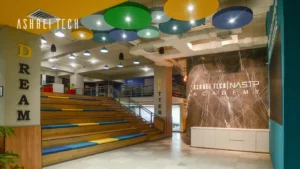
All programs are delivered at AshreiTech Academy, NASTP Silicon 1, 2nd Floor, Main Shahra-e-Faisal, Karachi.
Wondering which skills your team needs most right now?
Speak with AshreiTech Academy’s training consultants to identify your highest-impact skill gap and find the right program from our 2026 calendar. Register today before seats close — most upcoming sessions are already filling.